Beware of fake job offers and payment requests. We only use official email IDs and never conduct interviews on messaging apps.Beware of fake job offers and payment requests. We only use official email IDs and never conduct interviews on messaging apps.
Summary: Is your e-commerce website struggling to rank high in search results? This comprehensive guide will show you how to conduct an in-depth SEO audit and identify areas for improvement. This blog post covers each step, from setting goals to ongoing management, helping you keep your site dynamic, and competitive to attract more customers.
The success of e-commerce businesses heavily relies on their online visibility. Search Engine Optimization (SEO) is the key that can unlock the doors to increased visibility, attracting potential customers and boosting sales.
SEO isn’t a one-time deal; it’s a continuous journey. Regular SEO audits are like health check-ups for your website. They help you identify issues, seize opportunities, and ensure your e-commerce site is well-optimized.
This blog is your guide to conducting an in-depth E-commerce SEO audit. We’ll take you through each step, from setting clear goals to ongoing SEO management. By the end, you’ll have a solid grasp of how to ensure your e-commerce website is in the best health for search engine rankings.
Table of Contents
What Is an E-commerce SEO Audit?
An E-commerce SEO audit is a detailed review of your online store’s SEO performance. It helps identify areas for improvement, such as on-page optimization, site speed, and keyword targeting.
The audit ensures your website is search engine-friendly, user-friendly, and mobile-optimized, ultimately improving rankings and user experience.
Regular audits help uncover issues that could be harming your visibility and sales, allowing you to make the right changes for better traffic and conversions.
Why E-commerce SEO Audit Matters
An e-commerce SEO audit is a process of website health check. It is of paramount importance because it helps to detect and address challenges or areas of improvement for an e-commerce business. As we know, in this highly competitive digital industry, the visibility of e-commerce websites directly impacts their success.
Effectively carrying out SEO strategies enables these businesses to rank higher in search engine results, attracting organic traffic, increasing brand exposure, and driving sales.
That’s why an e-commerce website should be in the best health to drive sales. But how do we check that? Let’s delve into the details.
But first, it is important to understand two main areas of an e-commerce website – product pages and category pages.
Discover What Your Customers Search ForDiscover What Your Customers Search For
Get insights on evolving customer behaviour, high volume keywords, search trends, and more.
Most traffic on an e-commerce site comes from its product pages. It should be well-optimized for search engines as well as users. Follow the below steps to optimize the product pages of your e-commerce website:
1. Use keywords in your product titles and descriptions to help search engines and users understand what you offer.
2. Add descriptions to your images for easier indexing and better accessibility. For example, under the brand name, you can see the description of the product. It could have simply said ‘blue kurta’ but they strategically specified the product as ‘women blue printed straight kurta’.
3. Keep your product pages organized logically by grouping items into clear categories and subcategories. Refer to this example for a clear understanding
4. Write detailed and enticing meta descriptions for each product. Having your keywords in the meta description increases the chances of online visibility.
5. Check functioning of all the buttons like, Buy Now, Add to Cart, Discounts, Referral Codes, etc are working seamlessly.
2. Category pages
Another important aspect of an e-commerce website is category pages. Here are a few SEO tips for ecommerce sites to optimize the same:
1. Optimize title tags and descriptions with relevant keywords.
2. Check if pages are easy for search engines to navigate.
3. Keep categories well-organized and user-friendly for quick browsing.
4. Use high-quality product images to showcase your products effectively.
Now, that we have covered the two important things, let’s jump to the website audit part for better performance in terms of SEO.
E-commerce SEO Optimization: Process Before the Audit
1. Setting Clear Goals and Objectives
Define your SEO goals. Whether it’s increasing organic traffic, boosting the eCommerce conversion rate, or expanding your product range, clear objectives will guide your audit. So, before starting the process, ensure your vision is clear.
2. Collecting Necessary Data and Analytics
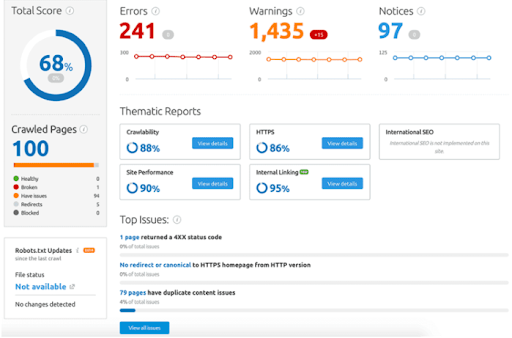
Gather insights by diving into your website’s data through tools like Google Analytics and Google Search Console. This data provides a snapshot of your website’s current performance and areas that need attention. From broken links to website traffic, you can gauge everything with the help of these tools during your ecommerce website seo audit.
3. Identifying Target Keywords and Competitors
Conduct eCommerce keyword research to identify the keywords you want to target and analyze your competitors. Understanding the keywords your competitors prioritize will help you refine your SEO strategy for better results.
The Step-By-Step Guide For E-Commerce Website Audit
Technical SEO Audit
1. Website Loading Speed and Performance
We all know the first impression matters. Slow-loading websites can deter users and impact your search engine rankings. To improve page load speed for e-commerce product pages, it’s essential to optimize your website for a better user experience. While tools can give you a basic overview of your site’s performance, a detailed SEO audit can provide a deeper analysis and actionable insights. With SEO audit services, you can identify specific issues affecting your load times and receive expert recommendations to improve your website’s performance.
2. Mobile-Friendliness and Responsive Design
The majority of e-commerce site visitors are on mobile devices. It is of utter importance to see if your site is mobile-friendly and provides an excellent user experience.
3. URL Structure and Hierarchy
An organized URL structure is not only user-friendly but also search engine-friendly. Make sure it is optimized the right way for both search engines and users.
4. Proper XML Sitemap and Robots.txt
These files are vital in how search engines crawl and index your site. Make sure they are correctly configured.
5. SSL Certificate and Secure Browsing
Website security is a ranking factor. Gain the trust of both users and search engines by ensuring your website is secure with an SSL certificate.
6. Fixing 404 Errors and Broken Links
Identify and fix broken links on your site. These can negatively impact user experience and result in SEO penalties.
Make sure your website is being crawled and indexed by search engines, and consider crawl budget optimization to ensure search engines prioritize key pages. Resolve any issues that may hinder proper indexing during your e-commerce site audit.
Google Search Console is a great tool for checking the technical aspects of your e-commerce site.
On-Page SEO Audit
1. Analyzing Meta Tags (Title, Description, Headings)
For a comprehensive ecommerce SEO checklist, optimize meta tags for each page, making them descriptive, keyword-rich, and within character limits.
2. Reviewing Product Descriptions and Content Quality
High-quality, unique product descriptions are one of the most important SEO practices. Ensure your product content is engaging, informative, and free from duplicate content issues.
3. Optimizing Image Alt Tags and Filenames
Images are integral to e-commerce. Optimize image alt tags and filenames to improve accessibility and SEO.
4. Checking Internal Linking Structure
Create a logical and user-friendly internal linking structure. This helps distribute link authority throughout your site.
5. Ensuring Unique Product Titles and Descriptions
Prevent SEO issues by avoiding duplicate product titles and descriptions. Each product should have unique content, a crucial factor to address during an e-commerce website audit.
6. Evaluating Keyword Usage and Placement
Review your keyword strategy. Ensure keywords are strategically placed within your content, including product titles, descriptions, and headings.
7. Assessing the Use of Schema Markup for Products
Implement schema markup to provide search engines with structured product data. This can lead to rich search results.
Content Audit
1. Reviewing the Quality and Relevance of Existing Content
Evaluate your website’s content. Identify low-quality or outdated content and decide whether to update or remove it.
2. Identifying Duplicate Content Issues
Duplicate content can confuse search engines. Identify and resolve issues related to duplicate content, such as the same product pages or thin content.
3. Planning Content Updates and Creation Based on Keyword Research
Ensure product listings are well-optimized with keywords, engaging descriptions, and quality images.
Off-Page SEO Audit
1. Backlink Analysis
Backlinks are crucial for determining your site’s authority and credibility in the eyes of search engines.
2. Evaluating Authority
The more reputable and relevant websites that link to your content, the higher your site’s authority is likely to be.
3. Credibility Check
When authoritative and trustworthy websites link to your content, it enhances your own site’s credibility, which can positively impact your SEO efforts.
4. Toxic or Spammy Backlinks
These are links from low-quality, irrelevant, or spam-filled websites that can harm your SEO efforts and lead to penalties from search engines.
5. Maintaining a Healthy Backlink Profile
The goal of the Off-Page SEO Audit is to ensure that your backlink profile remains healthy. This means regularly assessing your backlinks, disavowing harmful ones, and actively seeking high-quality, relevant backlinks to boost your SEO and online reputation.
6. Ongoing Backlink Strategy
Continuously monitoring and managing your backlink profile is essential for maintaining and improving your website’s authority and SEO performance.
User Experience
1. Engagement and Retention
When users find a website easy to navigate and use, they are more likely to spend time exploring products and making purchases. A positive UX can lead to higher retention rates and increased customer loyalty.
2. SEO Ranking Factors
Websites that provide a seamless and enjoyable user experience are more likely to rank higher in search results. Factors such as page load times, mobile-friendliness, and efficient navigation play a significant role in determining your site’s SEO performance.
3. Website Navigation
An intuitive menu structure, clear product categories, and easy-to-locate search bars are elements of user-friendly navigation.
4. Page Load Times
Ensuring that your e-commerce site loads quickly is essential for providing a positive user experience.
5. Mobile Experience
A mobile-friendly design ensures that your site functions well and looks appealing on various screen sizes. Google’s algorithms also prioritize mobile-friendly websites.
6. Overall Site Structure
A logical layout, categorized product listings, and easy-to-understand product pages are essential. Clear calls to action (CTAs) for making purchases or finding more information can improve the user journey and, subsequently, your SEO ranking.
Reporting and Action Plan After Audit
Consolidation of Audit Findings: Once you’re done checking all the parameters for an e-commerce SEO audit, comprehend all the data and insights obtained throughout the e-commerce SEO audit. After the process, you gain a comprehensive view of your website’s overall health.
Understanding SEO Status: Once the data is gathered, it’s essential to have a clear understanding of your website’s current SEO status. This includes strengths, weaknesses, and areas needing improvement.
Prioritization: The next step is to prioritize the identified issues and opportunities based on their impact and importance. This helps in focusing efforts on the most critical aspects of SEO improvement. For example, you see many broken links on your website. The ideal solution would be to fix the URL or delete the link.
Actionable Plan: The central objective is to create a practical and actionable plan that specifies precise steps to address the identified issues effectively. This plan serves as a roadmap for implementing changes and enhancements to boost your website’s search engine rankings.
Enhancing SEO Performance: The ultimate goal of the action plan is to improve your website’s SEO performance, leading to better visibility in search engine results and increased organic traffic.
Setting Goals and KPIs: In this phase, you establish specific goals and Key Performance Indicators (KPIs) to measure the progress and success of your SEO efforts over time. These metrics provide a basis for assessing the impact of the implemented changes.
Ongoing Monitoring: The action plan is not a one-time fix but a continuous process. Regularly monitoring your website’s performance and comparing it against the set goals and KPIs ensures that your SEO strategies are driving the desired outcomes.
Your Easy-to-Use E-commerce SEO Audit Guide
Now you know how conducting regular SEO audits can be the key to unlocking the full potential of your e-commerce website. It ensures that your site remains visible, competitive, and appealing to customers, while also aligning with your ecommerce SEO strategy.
By following this step-by-step guide, you can keep your website in top shape, driving success in the ever-evolving digital landscape. Don’t forget that a well-optimized website is your gateway to attracting more customers and boosting sales.
For a strong commitment to your e-commerce SEO journey and impressive results, contact us for 17+ years of experience and expertise in E-commerce marketing.
Neha Bawa is the Director of Brand Marketing at Techmagnate. She has worked in Digital Marketing since 2012 and has specialised in content creation. She has earned a Master’s degree in Interactive Communications from Quinnipiac University in Connecticut, U.S.A. Her interests lie in creating great content, docs, and working towards sustainability through biodiversity.
Get the most valuable search related insights about leading brands, trending keywords, search volumes, fastest growing categories, city-level insights and much more!
It has come to our notice that fraudulent job offers are being circulated on the internet through messaging apps like WhatsApp and Telegram, which falsely claim to be from Techmagnate. We take this matter seriously and would like to caution all candidates to be wary of such postings.
Please Note That –
We do not charge any fees/security deposit/payment from candidates, irrespective of the professional experience they hold, for job applications or interviews
Official communication channels include our website and verified social media accounts, primarily LinkedIn.
Kindly double-check the domain name – @techmagnate.com – in the email address
We follow a transparent and ethical approach for hiring/onboarding supported by proper documentation.
Ensure that you only apply through verified channels to avoid being scammed. We also recommend that you exercise caution when sharing personal information or financial details with any job posting or recruitment agencies claiming to represent us.
We want to ensure that potential candidates interested in joining Techmagnate have a safe and positive experience.
If you find that someone that fits the description above has reached out to you, please notify us immediately at jobs@techmagnate.com.
 Important Alert:
 Important Alert: